






Key Takeaways
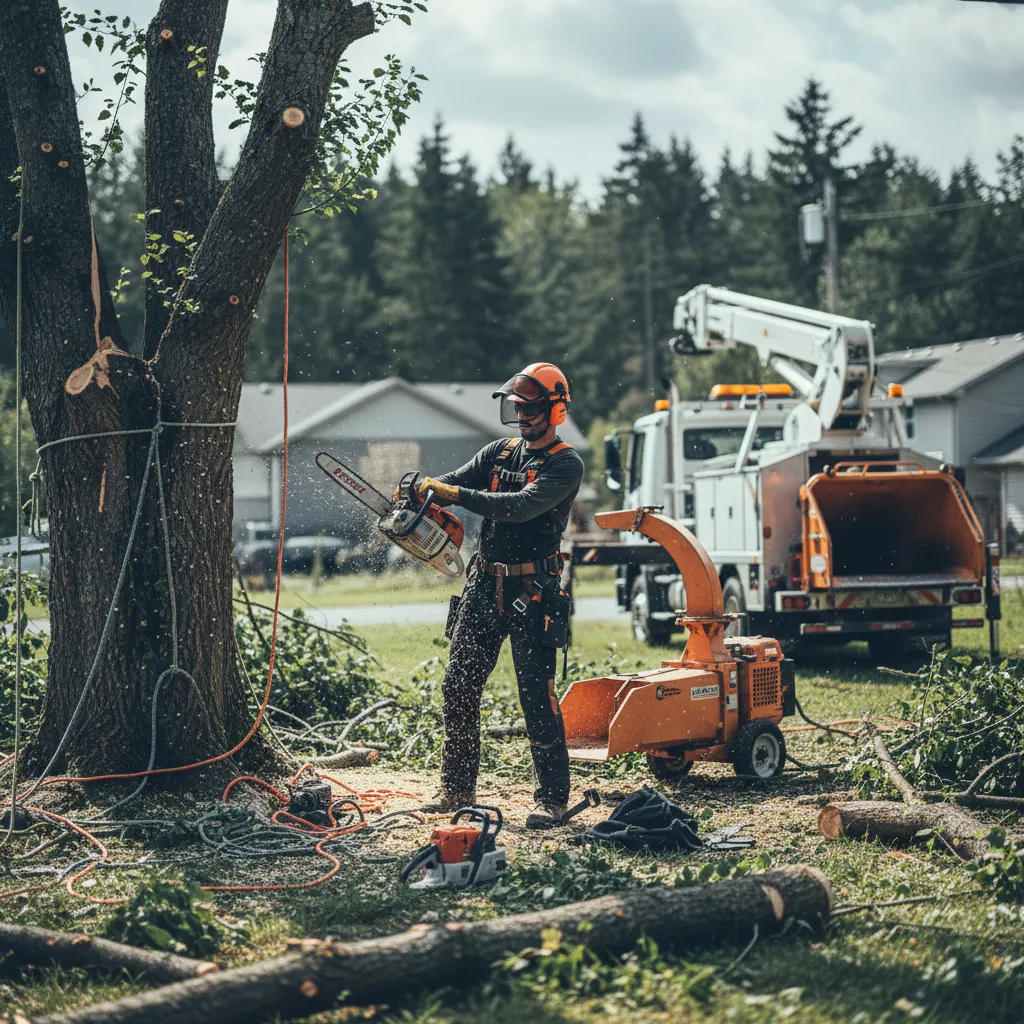
Tree service insurance typically includes four to six policies, and above-ground work costs roughly 2.5 times more to insure than ground-level trimming. Carriers price climbing, rigging, and aerial-lift exposure separately from mowing or ground-level pruning, so the type of work you do determines which carriers will quote and what you pay.
- General liability averages $8.39/hour for ground-level work and $21.22/hour for above-ground work (Thimble benchmarks)
- A landscape policy that excludes tree removal leaves you without coverage for removal, above-ground pruning, or stump grinding
- Contracts often require $1M/$2M general liability, additional insured, primary and noncontributory, and waiver of subrogation
- Payroll, equipment, height of work, location, and loss history all affect the premium carriers quote
The policies tree service businesses actually carry
Tree service insurance is not one policy. Most operations carry four to six coverages depending on the work, crew size, and contracts they take.
Tree service insurance is a package of policies for operations that trim, maintain, and remove trees. The package protects against employee injury, property damage to clients, vehicle accidents, and equipment loss.
Answer a few questions about your operation and see which coverages apply to your specific work.
Tree Service Coverage Guide
Answer a few tree work questions and see which policies to review.
Step 1
What tree work do you do?
Tell us about your trade and coverage needs. We'll look for relevant options across our marketplace.
Free. No obligation. Takes 2 minutes.
400+ carriers carrier and market options overall · Licensed in 30 states · No fees to compare
General liability
General liability covers third-party bodily injury and property damage from your tree work. A detached limb damages a client's roof. A client trips over equipment on the ground. A trimming job allegedly makes a tree more vulnerable to wind, and the tree later falls on a neighbor's fence.
Tree service businesses often need general liability through the excess and surplus market because the work is high-risk and can involve larger claims.
Workers compensation
Workers comp covers employee medical bills and lost wages after on-the-job injury. Climbing, chainsaws, chippers, and ground-crew lifting create severe injury exposure.
Most states require workers compensation. In high-risk industries like tree work, some states require it even for independent contractors and sole proprietorships.
Commercial auto
Tree services use pickup trucks, chipper trucks, bucket trucks, dump trailers, and equipment trailers. Personal auto policies exclude business use. Commercial auto covers liability to other drivers and can cover repair or replacement of your truck and trailer after an at-fault accident.
Equipment and inland marine
Chainsaws, stump grinders, chippers, climbing gear, and lifts travel between jobsites. Inland marine coverage protects mobile tools and equipment in transit or on the job. NIP Group's TreePro program offers inland marine limits up to $1M for tree care operations.
When you also need pollution, professional liability, or umbrella
- Contractors pollution liability — when you apply pesticides, herbicides, fertilizers, or have fuel and hydraulic-fluid spill exposure
- Professional liability or arborist E&O — when you provide inspections, risk assessments, plant-health advice, or written recommendations
- Umbrella or excess liability — when contracts or commercial property clients require limits above your primary general liability (NIP Group offers umbrella up to $5M and excess up to $25M for tree care)
Download a printable checklist of all coverage lines, typical limits, and common endorsements for tree service work. Use it when reviewing your current policy or comparing quotes.
Tree Coverage Checklist
Review tree service policies, limits, endorsements, and gaps before quotes or renewal.
1. Fill in details
0 of 7 fields filled
2. Review the preview
The document below updates as you type.
3. Download the file
Blank fields stay as fill-in lines.
Fill in details
Use only the details you have now. Empty fields remain editable in the downloaded checklist.
0/7 complete
Checklist
Download checklist
A downloadable checklist that organizes the insurance details for this task in one place.
Available as PDF, DOCX. The file uses the current field values.
Download
Preview of downloaded checklist
Updates as you type before download.
Preview of downloaded checklist
Updates as you type before download.
Next steps
- Compare each checked gap against current policies and certificates.
- Send unresolved items to an agent before accepting a tree work contract.
- Ask carriers to confirm tree removal, climbing, auto, equipment, and chemical exposures in writing.
How carriers classify tree work — and why it matters
Carriers separate tree work into distinct classes. A policy written for landscape gardening may explicitly exclude tree removal, leaving you uninsured for the work you actually do.
A filed Businessowners classification in Mississippi separates landscape gardening from tree service with the wording "Landscape Gardening - No Tree Service or Removal or Excavation." Carrier appetite data shows the same split: some markets write landscape gardening with "No Tree Removal," while separate markets list tree trimming, arborist services, tree removal, and tree service contractor classes.
| Work Type / Class | Carrier Eligibility | Key Distinction |
|---|---|---|
| Landscape gardening (no tree service) | Standard markets, many options | Excludes tree removal, above-ground work, excavation |
| Tree trimming / pruning | Specialty and some standard markets | Ground-level and above-ground trimming; removal may be excluded |
| Tree removal | Specialty and E&S markets | Full removal including felling, rigging, stump grinding |
| Utility line clearance | Program markets | Work near energized lines; higher limits typically required |
| Crane and boom operations | Program markets with riggers liability | Crane damage, lifted-equipment exposure, separate rating |
| Chemical application / spraying | Requires pollution coverage add-on | Pesticide, herbicide, fertilizer application triggers pollution exclusion |
The classification on your policy controls what the carrier will pay for. If your work has changed since you bought the policy, the classification may need to change too.
What carriers ask about when pricing tree service accounts
Carriers ask about these details because each one changes the likelihood and severity of a claim. Knowing what they ask helps you understand why quotes vary.
Tree trimming is considered high-risk by carriers. Working at height and using power tools create serious injury and property-damage exposure that carriers price accordingly.
Details that change your tree service quote
Height of work and climbing exposure
Ground-level trimming, ladder work, climbing with ropes, bucket trucks, and crane operations are rated differently. Above-ground work costs significantly more.
Equipment: chainsaws, chippers, bucket trucks, cranes
Specialized equipment creates higher severity claims. NIP Group lists crane and boom coverages and riggers liability as separate tree-care exposures.
Employee count and payroll
Workers comp cost scales with payroll. More employees doing high-risk work means higher premiums.
Subcontractor use
Coverage for claims involving uninsured subcontractors may be limited or excluded entirely. Public contracts may require evidence of subcontractor coverage.
Claims history and loss runs
NIP Group requires 4 years of loss runs for program-market submissions. Prior claims, non-renewal, or workers comp experience issues require more detail.
Chemical application and pollution exposure
Pesticides, herbicides, fertilizers, and hydraulic-fluid spill exposure trigger pollution exclusions or require coverage enhancements.
Requested limits and contract endorsements
Appetite data shows GL limits ranging from $1M/$2M to $5M aggregate depending on the carrier and work type.
A carrier reviews all of these details together. Two tree service businesses in the same state can get very different quotes based on height exposure, equipment, crew size, and claims history.
What tree service insurance costs — ground-level vs above-ground
Published cost data for tree service insurance separates ground-level work from above-ground work. The difference is significant.
Ground-level tree service insurance costs about $8.39 per hour on average (Thimble benchmark). Above-ground tree service insurance, excluding tree removal, costs about $21.22 per hour — roughly 2.5 times the ground-level rate.
Why above-ground and removal work costs more
Above-ground work involves climbing, rigging, aerial lifts, and falling-object exposure. A limb dropped from 40 feet can destroy a vehicle, fence, roof, or injure a bystander. The severity of potential claims is higher, so the premium is higher.
Tree removal adds felling, stump grinding, and heavy-equipment exposure. The above-ground hourly benchmark excludes tree removal, which means full removal operations likely cost more than $21.22 per hour to insure.
Program-market minimums for larger accounts
NIP Group's TreePro program lists a minimum package premium of $10,000 and a workers compensation minimum premium of $50,000. These are program-market figures for commercial, utility, or larger tree-care accounts — not what a small residential pruning operation should expect to pay.
What the benchmarks include and exclude
- Thimble's hourly averages are for general liability only — they do not include workers comp, commercial auto, or equipment coverage
- Your actual premium depends on state, payroll, claims history, limits, and endorsements
- A full program with GL, WC, auto, and equipment will cost substantially more than the GL-only hourly benchmarks
- The marketplace compares your account with carriers that insure tree work — submit your details once to see real numbers for your operation
Tell us about your trade and coverage needs. We'll look for relevant options across our marketplace.
Free. No obligation. Takes 2 minutes.
400+ carriers carrier and market options overall · Licensed in 30 states · No fees to compare
Coverage gaps that leave tree businesses exposed
These are real coverage gaps that tree service businesses discover after a loss — when the carrier denies the claim because the policy never covered the actual work.
A second common gap: general liability without pollution liability for chemical application. Tree-care programs offer pesticide and herbicide applicator coverage, limited jobsite pollution, and auto pollution broadened coverage as specialized options. Without these, a chemical drift incident or hydraulic-fluid spill on a client's driveway is not covered.
A third gap: no commercial auto for chipper trucks, bucket trucks, or trailers. Personal auto policies exclude business use. If your chipper truck causes an accident on the way to a job, personal auto will not pay.
Tell us about your trade and coverage needs. We'll look for relevant options across our marketplace.
Free. No obligation. Takes 2 minutes.
400+ carriers carrier and market options overall · Licensed in 30 states · No fees to compare
What contracts require: limits, additional insured, and endorsements
When a GC, municipality, or property manager hands you a contract, these are the insurance terms they typically require. Missing any one can delay or block the job.
Santa Cruz County's independent contractor agreement for emergency tree removal, trimming, and stump grinding required $1,000,000 combined single limit GL, $500,000 combined single limit auto liability, and statutory workers compensation. The agreement also required the contractor's insurance to be primary as respects the County, with the County's insurance excess and noncontributing.
Additional insured endorsements
Many contracts ask you to add the customer, owner, municipality, or GC as an additional insured. This extends your liability coverage to that third party for claims arising from your work.
Older ISO additional insured endorsements used broader "arising out of" wording, while later forms use "caused, in whole or in part, by" wording. The endorsement wording affects how coverage responds to a claim. CG 20 10 covers ongoing operations. CG 20 37 covers completed operations — meaning claims that arise after the job is done.
Primary and noncontributory
Primary and noncontributory wording requires the contractor's policy to pay before other applicable policies and without seeking contribution from them. The municipality or general contractor does not want its own liability policy sharing the first layer of a contractor-caused loss.
Waiver of subrogation
A waiver of subrogation means your insurer gives up the right to pursue recovery against a liable third party after paying a loss on your behalf. The customer or general contractor wants your insurer not to sue them after a covered loss.
Use the tool below to check which endorsements your contract is asking for and what to request from your carrier.
Tree Contract Endorsement Checker
Match tree-service contract wording to endorsement requests and example limits.
Pick the clause your client or GC is asking for.
Matching rows
Choose lookup inputs
Select one or more fields to filter the requirements table.
What happens when a certificate gets rejected
The hiring party reviews your certificate of insurance for policy dates, named insured, limits, and endorsement wording. If any required term is missing — additional insured, primary and noncontributory, waiver of subrogation, or minimum limits — the certificate gets rejected and you cannot start work until the issue is resolved.
Clients often require an active tree services insurance policy and a certificate of insurance to prove it. Request endorsements at the time you buy or renew the policy, not the day before a job starts.
How GL, WC, and pollution claims happen in tree work
These examples show which policy line pays for which loss — and what happens when the coverage is missing.
Worker injury from chipper — workers comp
OSHA cited a Lehigh Valley tree service after a 17-year-old worker died in a woodchipper incident, proposing $124,987 in penalties and alleging failures involving PPE, woodchipper training, first-aid personnel, and fire extinguishers. Carriers ask about chipper training, PPE requirements, and jobsite supervision because these details affect claim frequency and severity.
Falling limb damages client property — general liability
You are pruning a large oak in a client's backyard. A limb breaks free during the cut and falls onto the client's detached garage, collapsing part of the roof. Damage to the structure and a vehicle inside totals $42,000.
General liability covers the client's property damage. You pay your deductible. The carrier pays the rest up to your per-occurrence limit. Without GL, you owe the full $42,000.
Chemical misapplication — pollution liability
Pollution claims in tree work include wrong chemical mix, overspray killing adjacent plants, hydraulic hose bursts on an aerial lift contaminating a driveway, and a truck overturning with herbicide contents spilling into a road or water system.
Standard GL excludes pollution claims. If you spray, treat, or transport chemicals, you need a separate pollution endorsement or contractors pollution liability policy. Without it, the cleanup cost and third-party damage come out of your pocket.
Tell us about your trade and coverage needs. We'll look for relevant options across our marketplace.
Free. No obligation. Takes 2 minutes.
400+ carriers carrier and market options overall · Licensed in 30 states · No fees to compare
Compare carriers that insure tree service work like yours
Submit one quick form. The marketplace compares your account with carriers that insure tree service work, and licensed insurance professionals can review the options with you.
The marketplace compares your account with carriers that insure tree work for your work type, crew size, state, height of work, and contract requirements. Licensed insurance professionals can review the options with you.
Submit one quick form. The marketplace compares your account with carriers that insure tree work — ground-level trimming, above-ground removal, crane operations, utility clearance, and chemical application. Licensed insurance professionals can review the options when the account is complex or the deadline is tight.
If your operation also does tree trimming as a subset of your services, or if you handle landscape maintenance alongside tree work, make sure your policy classification covers all the work you actually perform.
Frequently asked questions
Does a landscaping insurance policy cover tree removal?
Often not. Many landscape gardening policies have explicit exclusions for tree service, tree removal, or excavation work. A filed classification in Mississippi separates landscape gardening from tree service with 'No Tree Service or Removal' wording. If your revenue comes from removal, above-ground pruning, or stump grinding, confirm your policy actually covers that work before you take the job.
Why does above-ground tree service insurance cost more than ground-level work?
Above-ground work involves climbing, rigging, aerial lifts, and falling-object exposure. These create more severe injury and property damage claims. Thimble benchmarks show above-ground tree service insurance averages $21.22 per hour compared to $8.39 per hour for ground-level work, roughly 2.5 times the cost.
Do tree service businesses need pollution liability coverage?
If you apply pesticides, herbicides, fertilizers, or deep-root treatments, standard general liability typically excludes chemical drift, misapplication, and spill cleanup. Specialized tree-care programs offer pesticide and herbicide applicator coverage, limited jobsite pollution, and auto pollution broadened coverage. Chemical application changes how carriers underwrite the account.
What limits do contracts usually require for tree service work?
Requirements vary by customer. A Santa Cruz County tree maintenance contract required $1M combined single limit general liability, $500K combined single limit auto liability, and statutory workers compensation. Commercial property managers and general contractors often ask for $1M per occurrence and $2M aggregate general liability with additional insured, primary and noncontributory, and waiver of subrogation endorsements.
Can a one-person tree service get insurance without employees?
Yes. A solo operator still needs general liability and commercial auto at minimum. Workers compensation requirements vary by state. Some states require it even for sole proprietors in high-risk trades like tree work.
What happens when a tree service carrier non-renews the policy?
Non-renewal usually means the carrier decided the account no longer fits its underwriting criteria, often after claims, a class-code change, or new height or equipment exposure. You need to find a new carrier before the policy expires. Program markets and excess-and-surplus carriers write tree service accounts that standard markets decline. Submit your loss runs and current details to compare options.